
Whitney Westrope
Professional Portfolio
Plan for and implement effective teaching and learning
3.3 Use teaching strategies
Include a range of teaching strategies.
There are many different teaching strategies that are used each day in Kindergarten Gold and are aimed to allow for individual investigation or exploration as well as explicit intentional teaching moments.
Whole class warm-ups: These are used during mat sessions to introduce a topic, continue exploration a concept or consolidate the learning that has taken place. They are used for literacy or numeracy topics and allow for targeted questioning and whole class discussions on a particular topic or skill. These warm ups also include songs or videos that promote fine motor development using playdough or finger plays to help with strength and dexterity.
Songs and actions: These are used quite often and very much used to support learning and transitions. Songs and actions are used to welcome our friends into our classroom each day ad well as during transition times between activities or mealtimes. Rhymes and actions are used to introduce topics such as numbers and sounds as their repetitive nature helps the children to convert the concept to their long term memory.
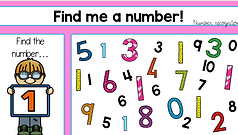
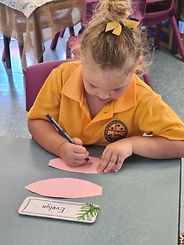
Modelled reading/ writing of letters and numbers: Texts and writing (pencil grip, direction) are modelled during mat sessions and teacher directed activities as a way for the children to see how certain numbers and letter are written/verbally spoken and how simple reading behaviours are exhibited. By repeatedly modelling the correct behaviours and formation/sounds, the students will begin to understand the connection between the spoken and written word. It is important that not only are the concepts verbally modelled but also visually represented so that the connection is again strengthened.
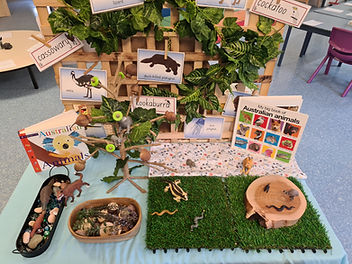
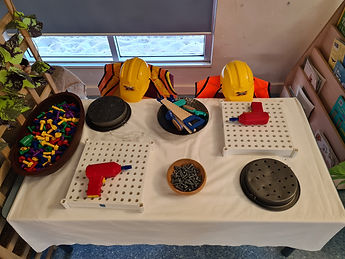
Investigation tables/ provocations: Invitations are set up for the children to explore independently but with teacher intervention if required. These invitations/investigation tables are taken from the students interests (such as cars and other modes or transport) and from the concepts explored during mat sessions. The tables aim to evoke the students curiosity and imagination and allow them to develop a deeper understanding of a concept/idea using their own intrinsic motivation.
.png)
.png)
.png)
.png)
Kagan Structures: Rally Robin and Timed Pair Share: These co-operative learning strategies are part of a whole school directive and are introduced in Kindy. These strategies allow students to share their ideas before going off to explore through play in a way that gives opportunities for equal sharing time. It also allows those students who are unsure to hear the ideas of their classmates which will after some time give them the confidence to participate.
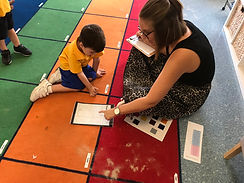
Individual/small group work: Students are invited to complete a range of experiences both one on one with an educator as well as in a small group. This allows for intentional teaching of concepts to occur and gives the educator to determine if more time needs to be spent on a certain skill.


EYLF Outcomes: 1.1.2, 1.2.9, 4.1.2
NQS Quality Areas: 1, 3, 4 & 5
Domains: Physical, social, cognitive, creative